

How Interior Design Impacts Mental Wellbeing at Home

Our homes shape how we feel, how we rest and how we recover. In Australia, where light and landscape define daily life, the relationship between interior spaces and the natural environment becomes particularly influential.
Interior design, when approached with care and intention, can support mental wellbeing in quiet but meaningful ways. Thoughtful use of natural light, connection to outdoors, natural materials and spaces that feel balanced rather than overstimulating all contribute to a sense of calm and emotional safety. These principles sit at the heart of biophilic design, not as a stylistic choice, but as a way of designing homes that work with human rhythms rather than against them.
A well-designed home should be grounded and restorative. It should offer moments of pause, support everyday rituals, and create a sense of belonging to place the moment you step inside.
The Role of Light in Emotional Regulation
Natural light is one of the most powerful tools in interior design. It affects circadian rhythms, sleep quality, mood and energy levels.
Homes that prioritise access to natural daylight tend to feel calmer and more uplifting. This is not simply a matter of window size, but of how light is invited to move through a space. Layout decisions, room orientation, wall colours and surface finishes all play a role in how light is reflected, diffused and softened as the day unfolds.
A room that gently wakes you with morning light has a profoundly different effect on the body than one that remains dim until evening. Only in recent years have we begun to fully understand the medical and psychological benefits of early daylight exposure, with health professionals now widely recommending natural light soon after waking. Ideally, this comes from a bedroom window, though light at a breakfast table, workspace or wherever your day begins is equally valuable. Thoughtfully designed, these moments of daylight become an effortless part of daily life, supporting wellbeing without requiring conscious effort.
Artificial lighting is just as important as natural light. A layered lighting approach incorporating ambient, task and low-level lighting allows a home to respond intuitively to different activities and times of day. While bright overhead lighting is highly effective for practical tasks such as cleaning or DIY, it can feel harsh and overstimulating in the evening.
Warmer, more considered lighting fosters a sense of comfort and ease, better supporting the body’s natural transition into rest later in the day. In practice, the most effective results come from warmer light sources in the 2700–3000K range, positioned below eye level. Table lamps, discreet LED lighting and floor lamps with warm bulbs are ideal to switch on when arriving home in the evening. This softer light is more readily accepted by the body, encouraging a slower, more relaxed state as the day winds down.
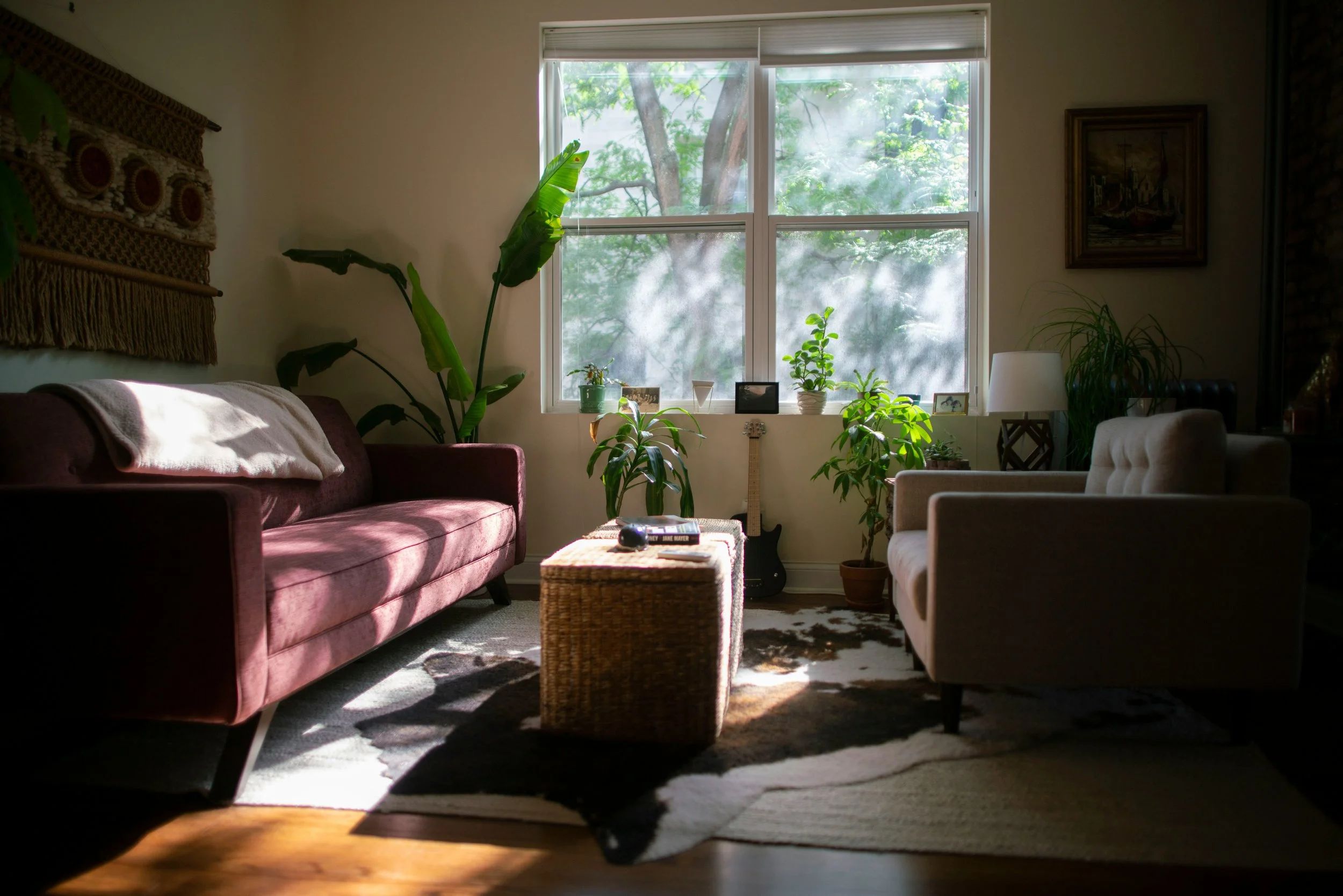
Photo by JC Bonassin on Unsplash
Proportion and the Sense of Calm
Proportion is often felt before it is noticed. Rooms that are well balanced tend to seem calmer, even if we cannot immediately explain why.
When spaces are too tight, cluttered, or awkwardly arranged, the body registers tension. When proportions are thoughtful, movement becomes intuitive and unforced. Furniture placement, ceiling heights, circulation paths and spatial flow all contribute to how relaxed a space is to inhabit.
Good proportion allows a home to breathe. It reduces friction in daily life and supports a sense of quiet order.
Material Honesty and Sensory Comfort
The materials we touch and live with each day have a deeper impact than we often realise. Natural, honest materials tend to age with grace, offering a sense of grounding and permanence. Timber, stone, linen, wool and clay possess a tactile warmth and visual depth that synthetic alternatives rarely replicate. They absorb light rather than reflecting it harshly, and they develop character over time instead of appearing dated.
Think of centuries-old Chinese pottery, marble steps in Rome worn smooth at their centre by countless footsteps, or solid timber furniture passed down through generations, bearing scratches, stains and marks left by previous lives. These traces do not diminish their beauty, they deepen it. This is material honesty: surfaces that tell their story, and in doing so, become richer with time.
Material honesty also means allowing finishes to be what they truly are, rather than imitations of something else. When materials are used authentically, they not only feel more considered but tend to be more durable over time. A solid brass fixture, for example, can be sealed to retain its original golden tone, left to age naturally and develop a patina, or gently polished back to its original finish when you wish to begin that ageing process again.
This adaptability offers longevity and resilience without the need to remove and replace fittings unnecessarily. It is a quieter, more sustainable approach to design, one that values endurance over novelty. A home should never feel as though it is pretending to be something it is not.
Biophilic Design in the Australian Home
Biophilic design has particular resonance in Australia, where daily life is closely tied to landscape, climate and light. Our environments are shaped by strong sun, shifting seasons (this is more visible in some parts of the country than others) and a deep cultural relationship with the outdoors. In residential design, biophilia is not about adding greenery for effect. It is about creating a meaningful connection between inside and out.
This might show up through framed views to gardens or sky, operable windows that invite breezes, shaded transitions between indoors and outdoors, or materials that echo the textures and tones of the surrounding environment.
Australian biophilic design also responds to our unique climate conditions. Thoughtful orientation, cross-ventilation, thermal mass and the use of native or climate-appropriate planting all contribute to homes that seem calmer and more attuned to their setting. These strategies reduce reliance on mechanical systems while supporting comfort and wellbeing. When a home works with the environment rather than against it, it tends to be more settled, more breathable, low maintenance and easier to inhabit.
At its best, biophilic design creates a quiet sense of belonging. It reinforces the understanding that a home is not separate from its place, but part of a broader landscape. This connection can be deeply reassuring, supporting emotional regulation and a sense of grounding that is particularly important in contemporary life. In this way, biophilic design becomes less about aesthetics and more about how a home supports human rhythms within the Australian context.
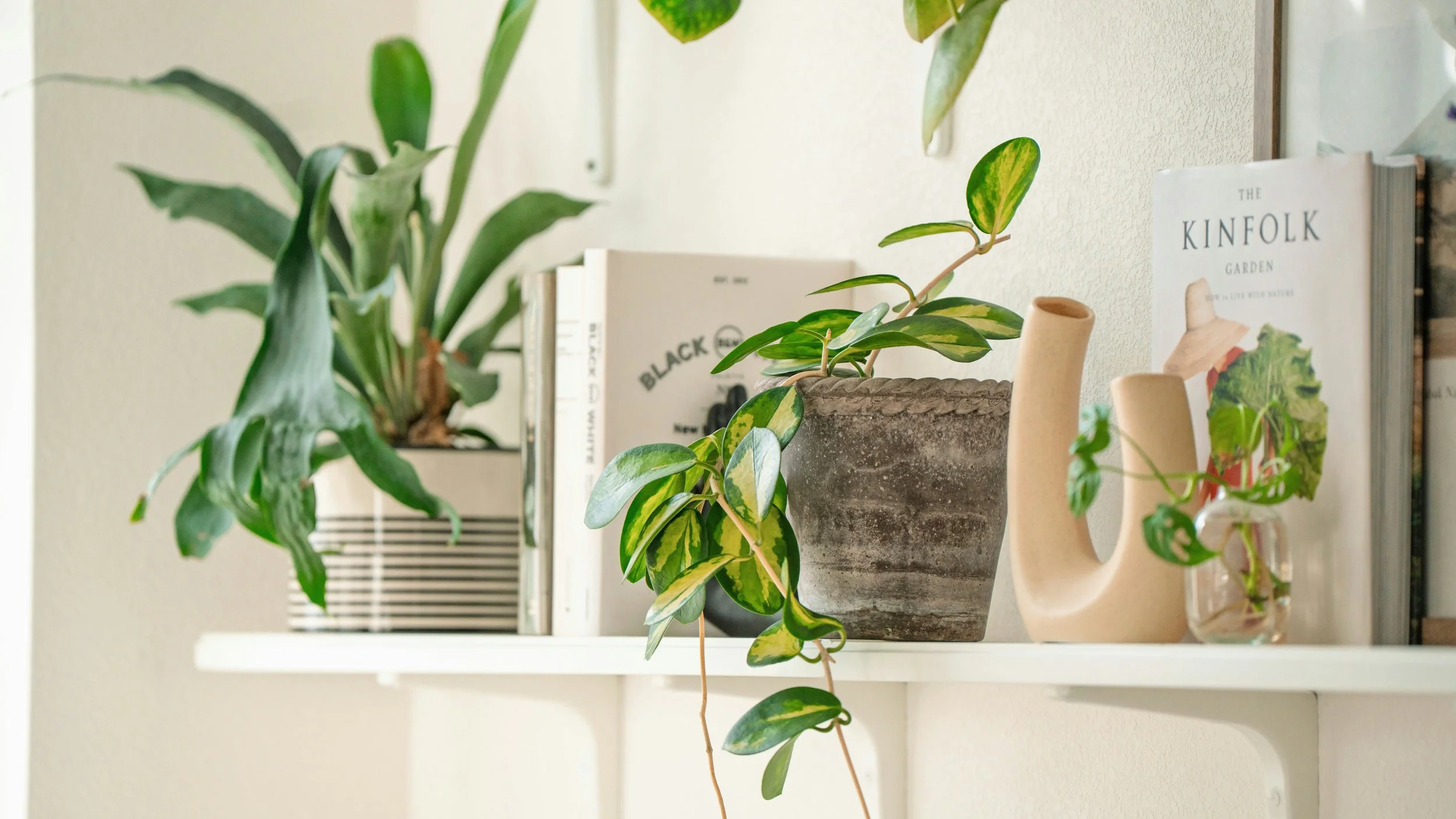
Photo by Kailun Zhang on Unsplash
Mental Clarity, Emotional Safety and the Feeling of Home
Visual clutter can contribute to mental overload. When everything competes for attention, the mind struggles to settle. Thoughtful interior design addresses clutter not through minimalism for its own sake, but through intelligent storage, clear zoning, and intentional choices. When every item has a place, and when spaces are designed to support real life, the home becomes easier to maintain and easier to live in. Reducing clutter is not about perfection. It is about creating room for calm, focus and rest.
Perhaps the most important role of interior design is creating emotional safety. A home should be a refuge. This sense of safety comes from familiarity, warmth and spaces that reflect the people who live there. It is created through layered design, personal objects, comforting textures and rooms that support both connection and retreat. When a home offers emotional safety, it allows us to exhale. It becomes a place where we can recover from the outside world, rather than another source of pressure.
The Rise of At-Home Wellness Spaces
In many of the homes we have designed in recent years, dedicated wellness spaces have become a clear priority. Saunas, steam rooms, plunge zones and calm bathing environments are no longer reserved for hotels or day spas. They are increasingly being integrated into private residences as part of everyday life. This shift reflects a broader understanding of wellbeing as something to be supported daily rather than saved for special occasions. Homeowners are seeking spaces that assist nervous system regulation, recovery and ritual. These rooms are not conceived as indulgences but as places to decompress and reconnect with the body.
This evolution is also evident in the products now being specified. Tapware and sanitaryware once designed primarily for commercial spas are increasingly being sourced for high-end residential projects. The focus has shifted toward finish quality, precise temperature control and long-term durability rather than visual novelty alone. Specialist spa manufacturers have spent decades studying water as both a physical and emotional medium. Their systems are designed to stimulate, calm or restore through considered variations in temperature and pressure, reinforcing the role intentional design plays in supporting wellbeing. While these products were historically difficult to source locally due to Australian WELS requirements, manufacturers are now adapting their offerings in response to a growing and discerning Australian market.
When thoughtfully integrated, wellness spaces often become some of the most emotionally grounding rooms in a home. They invite stillness. They encourage routine. They offer privacy and pause in a world that rarely slows down. Australians are notably active, and bringing moments of wellness into the home supports a broader pursuit of longevity, robust health and mental clarity.
Importantly, these spaces only succeed when they are designed with the same rigour as the rest of the home. Proportion, material selection, acoustics, lighting and the transition into and out of the space all matter. When executed well, a wellness area does not feel like an addition. It feels inevitable.
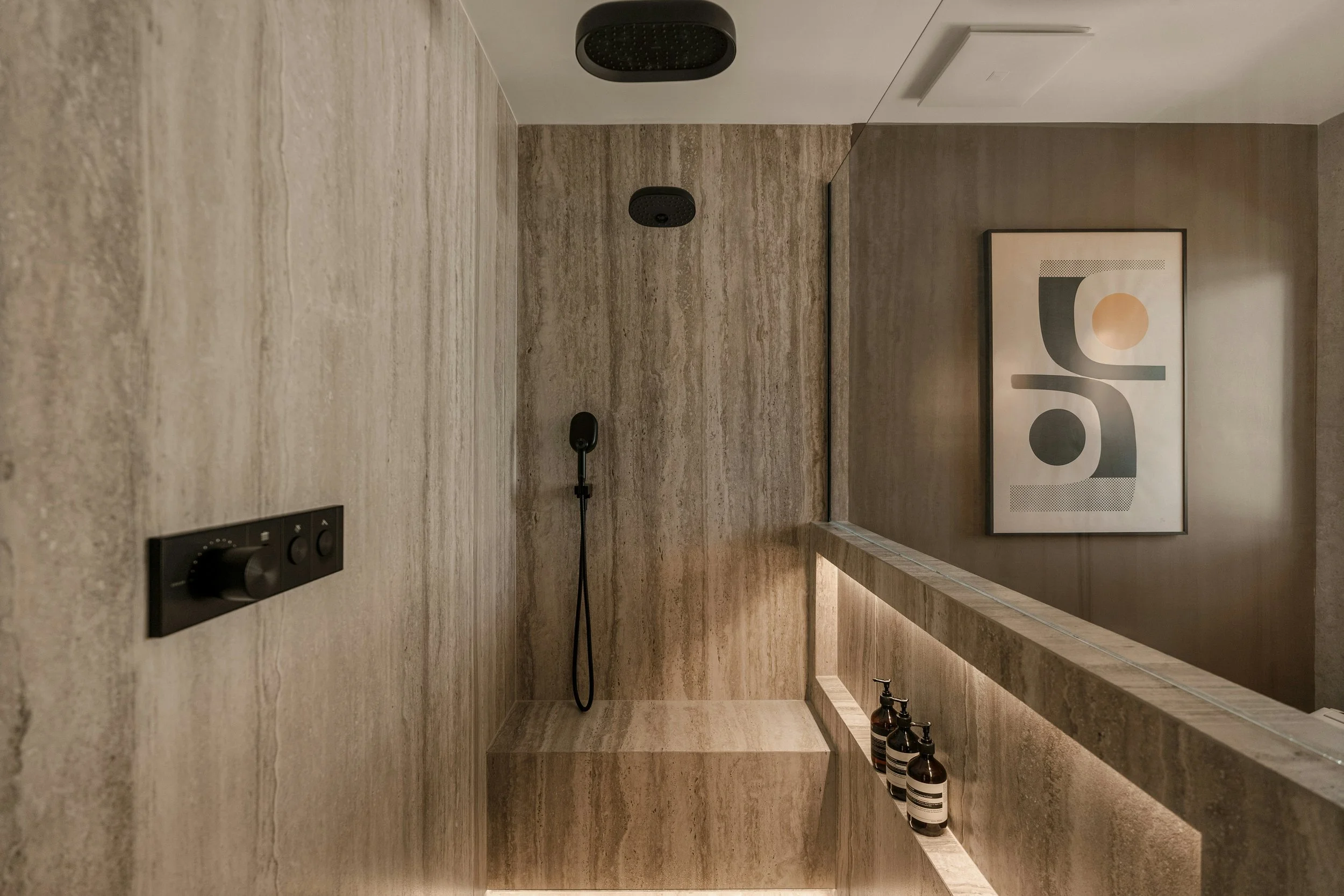
Photo by Peter Muniz on Unsplash
Practical Ways to Introduce Wellness at Home
Wellbeing-led design does not require large spaces or extensive renovation. In smaller bathrooms, for example, a Japanese-inspired soaking tub allows bath lovers to maintain a cherished ritual without the footprint of a traditional bath. These deeper, more compact tubs prioritise immersion rather than length, making them particularly well suited to apartments and modest homes where space must work harder.
For those who favour showers, a fully specified overhead shower paired with body jets can introduce a sense of everyday indulgence, even within the smallest of bathrooms. These systems often perform best in more contained spaces, where ceiling heights and wall widths allow water pressure, temperature and steam to be experienced as intended. In oversized bathrooms, this sense of enclosure can be lost, whereas smaller rooms often feel cocooning and restorative. Fixtures with integrated massage functions can be a seamless addition to a bathroom design, though it is important to ensure a continuous hot water system is specified to support their performance.
Wellness can also be introduced through simpler, non-invasive choices. High-quality towels, considered lighting, high-thread-count bed linen and designer scented soaps or bathing products all contribute to sensory comfort. These tactile details shape how a home is experienced on a daily basis, reinforcing moments of care and ritual without the need for structural change. When layered thoughtfully, small decisions like these can have a surprisingly profound impact on how supported and at ease a space becomes.
Air Quality and the Ability to Breathe Well at Home
Over the past five years, almost every client we've worked with has raised air quality as a priority. There is a growing awareness that how air moves through a home, and how clean it is, has a direct impact on health, comfort and daily wellbeing. Many clients want flexibility. The ability to open windows fully and allow cross breezes when conditions are good, paired with high-performing air conditioning systems when they are not. This dual approach reflects an understanding that wellbeing is not about relying on a single solution, but about choice and adaptability.
In Australia, this conversation increasingly includes bushfire season. Clients are asking about filtration and ventilation systems that help manage smoke and airborne particles when outdoor air quality deteriorates. Thoughtful mechanical ventilation, combined with high-quality filters, allows homes to remain protective and breathable during these periods without becoming sealed or stagnant. These systems are most effective when they are considered early in the design process and integrated holistically rather than added as an afterthought.
Thermal comfort in winter is approached with the same care. While central heating systems provide consistency, many clients also value the option of radiators or hydronic heating. These systems tend to be gentler on the body, particularly for those with asthma, eczema, or respiratory sensitivities, as they avoid circulating dry air and dust. When layered correctly, a home can offer warmth without compromising air quality, creating an environment that is nurturing rather than demanding.
Designing for Wellbeing Is Not About Trends
Designing for mental wellbeing is not about chasing the latest aesthetic or following rigid rules. It is about listening. To the space, to the light, and to the people who live there. A well-designed home does not demand attention. It supports you quietly, day after day.
At Storey & Stone, we approach interior design with longevity and care. We believe that homes designed with intention can positively shape how people experience daily life, rest and recovery.
If you're considering how your home could better support your wellbeing - whether through light, materials, or dedicated wellness spaces - we'd welcome the conversation.