

Small Block, Big Ambitions: Maximising Space on Melbourne’s Urban Sites
You've already done the research. You know inner Melbourne blocks are shrinking - from 650m² in 2000 to 280-350m² today. You've scrolled through enough renovation accounts to recognize the difference between strategic design and pretty styling. If you're planning to build or renovate on a compact site in the next two years, you're probably wondering: can this actually work without feeling like a compromise? Yes. But it requires honest budgeting, early planning, and design decisions that Melbourne's overlays and climate make non-negotiable.
This is the reality check - and the roadmap.
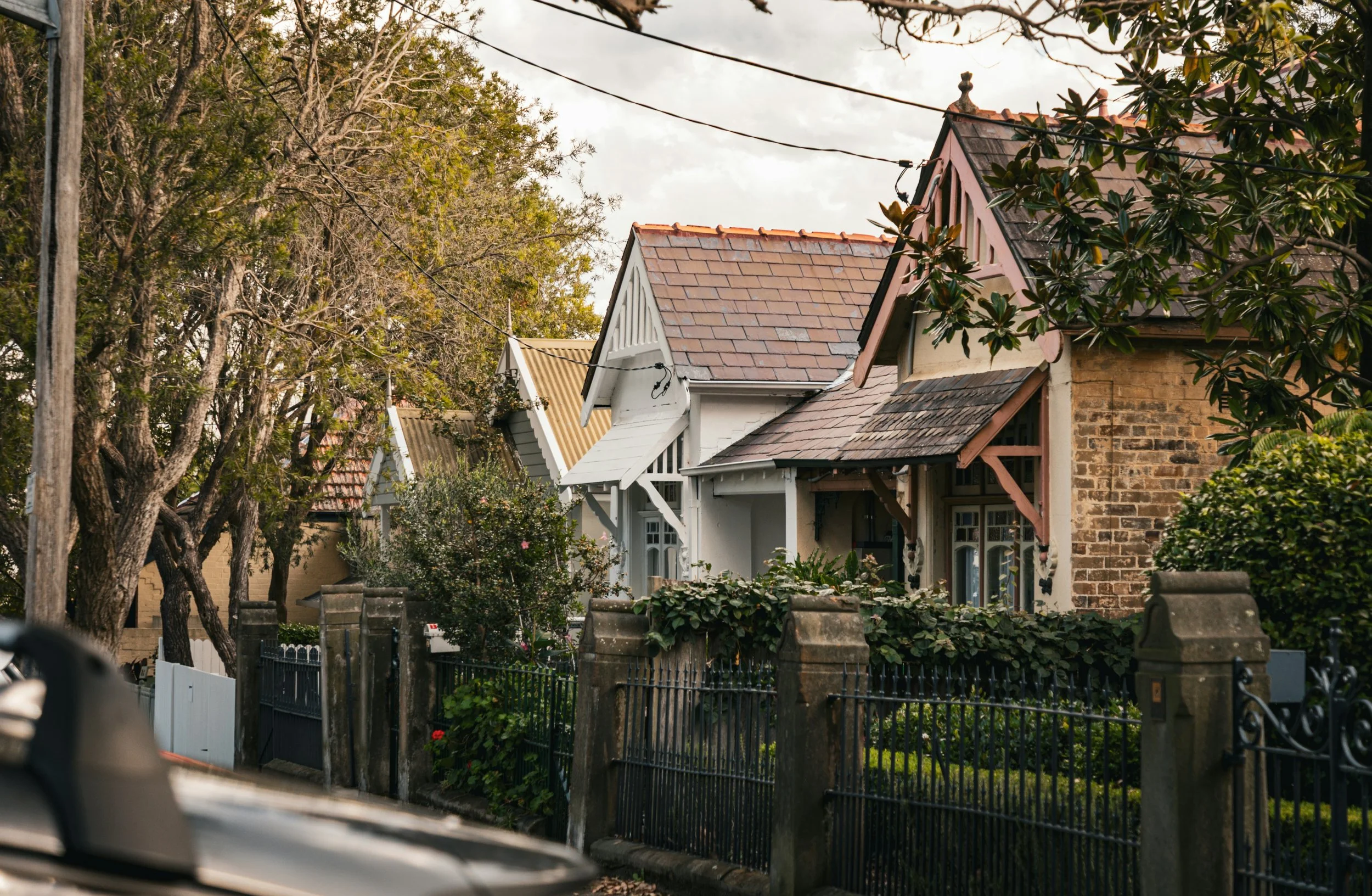
Photo by Macourt Media on Unsplash
The Melbourne Reality: What You're Actually Working With
Designing for compact urban sites in Melbourne isn't just about square metres. It's about navigating a planning framework that was written for larger blocks, updated piecemeal, and enforced differently across councils.
Before you engage anyone, understand your site constraints:
Planning overlays - Check your property on Victorian Planning Authority's planning schemes or use Your Development to see what applies. Heritage overlays alone can add 3-6 months to approvals.
Height limits and setbacks - Most inner councils cap at 9-11m. Setbacks eat into already tight footprints. On a 180m² block, setbacks can claim 30-40% of your buildable area.
Overshadowing regulations (ResCode) - Your neighbour's north-facing windows must receive minimum solar access. This often forces buildings lower or narrower than the height limit allows. Non-negotiable.
Overlooking constraints - Habitable room windows (e.g., bedroom, living room) within 9m of a boundary need screening or obscure glazing below 1.7m. This affects window placement, room orientation, and natural light - not just privacy.
Access during construction - Narrow frontages (under 8m) mean everything comes through the front. Scaffolding, materials, waste. If you're on a rear block or battle-axe site, add 15-20% to construction costs for access logistics.
Council-specific quirks:
City of Melbourne: Fastest approvals but strictest overlooking rules
Port Phillip: Heritage overlays on 60%+ of residential zones
Yarra: Strong emphasis on neighbourhood character - expect detailed material justifications
Boroondara: Conservative on modern materials in heritage areas
Timeline reality check: Planning permits in inner Melbourne currently run 6-10 months. Then 6-9 months for construction on a small renovation, 9-14 months for new builds.
If you're planning to move in 18 months, you may find the timeline challenging.
What Actually Costs Money on Small Blocks (and What Doesn't)
Small blocks aren't cheaper to build on. They're differently expensive.
Where you save:
Smaller foundation footprint - Less excavation, less concrete
Reduced site coverage fees - Some councils charge per m² over certain thresholds
Lower material volumes - Fewer bricks, less cladding, smaller roof area
Where you pay more:
Engineered solutions - Tight sites often need structural steel where timber would work on larger blocks: +$15,000-35,000
Custom joinery - Standard furniture doesn't fit. Built-in storage runs $1,200-2,800 per linear metre for quality cabinetry in Melbourne (2025)
Access logistics - Crane hire for tight sites: $2,500-4,500 per day. Scaffolding on narrow blocks: +$8,000-15,000
Acoustic engineering - Close neighbours = sound transmission issues. Proper acoustic design: $3,500-8,000; implementation adds 8-12% to build cost
Premium materials that work harder - When you have less space, every surface matters. Budget for materials that age well and don't visually clutter
Current Melbourne benchmarks (2025):
Renovation/extension: $3,800-5,500 per m² (depending on finishes, structural work)
New build on small block: $4,200-6,800 per m²
High-end custom small home: $7,000-9,500 per m²
Pricing caveat: All costs quoted in this article are indicative ranges based on Melbourne market conditions as of early 2025. Actual costs vary significantly depending on site conditions, material selections, builder experience, and current market factors. These figures are provided for planning purposes only and should not be considered quotes or guarantees. Always obtain multiple detailed quotes from licensed builders and tradespeople for your specific project.
Add 15-20% contingency. Small sites have less margin for error, and fixes cost more when space is tight.
Useful resource:Master Builders Victoria publishes quarterly cost guides - Melbourne runs 15-20% above their state averages.
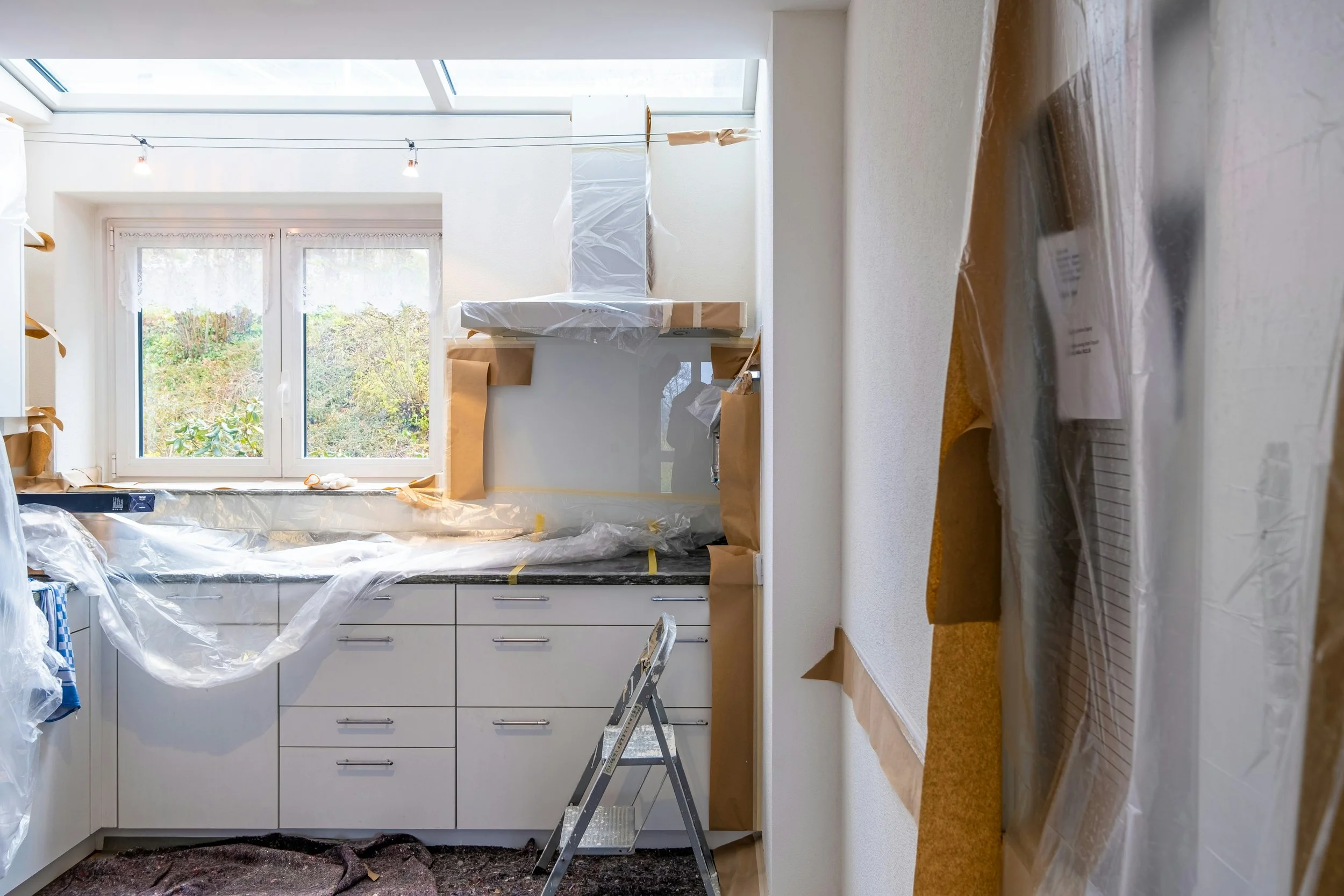
Photo by immo RENOVATION on Unsplash
Multi-Functional Spaces: When They Work and When They Don't
Multi-functional design is misunderstood. It doesn't mean a room does everything. It means a room can shift between modes without looking like it's trying too hard.
The key is hierarchy. Every space must still know its primary purpose.
What works: A 3.2m x 4.1m room that shifts
This was a combined dining/study in a Carlton North renovation. The room needed to function as:
Daily WFH space (3-4 days per week)
Dining for 2-4 people (nightly)
Entertaining space for 8 (monthly)
The setup:
Custom dining table, 1.6m x 900mm, with integrated cable management (power/data drops at each end)
Pendant lighting on dimmers (bright for work, soft for dining)
Wall-mounted monitor arm (folds away)
Joinery credenza with filing, printer storage, and dining storage in one unit
Material shift: Work zone has hard flooring, dining zone has rug (defines without dividing)
Cost: $12,500 for table and credenza, $1,800 for electrical/data, $950 for lighting.
Why it works: The room defaults to dining. Work mode is additive (pull out laptop, flip down monitor), not transformative (no murphy desks, no hidden mechanisms that break).
What doesn't work - honestly:
Murphy beds in living rooms - They rarely get used. Clients report they're too heavy, too annoying, and the room never fully commits to being a bedroom or a living space.
Dining tables that convert to desks via complex hardware - They're always in the wrong mode when you need them.
"Flex rooms" with no dedicated purpose - They become junk rooms within six months.
The question to ask: What is this room's job 80% of the time? Design for that, then make the 20% case easy.
Case study: Guest room reality check
Most Melbourne homes don't need a dedicated guest room. Guests visit 8-12 nights per year maximum.
Better solution: Study with quality sofa bed (not futon - actual comfort). Joinery includes guest bedding storage. Room is used 350+ days as study, 10-15 days as guest room.
One client in Abbotsford: "We almost built a third bedroom. Spent that budget on better kitchen joinery and a $2,800 sofa bed. Guests are comfortable, and we use the study every single day."

Image courtesy of Freepic
Light and Air: The Non-Negotiables That Make or Break Small Homes
Space isn't just measured in square metres. It's measured in light, air, and proportion. A small home with strong daylighting and cross-ventilation will always feel more generous than a larger home without them. This is particularly critical in Melbourne, where seasonal light shifts dramatically (winter sun angle vs summer) and indoor comfort is closely tied to wellbeing.
Melbourne solar access data:
Winter solstice (June 21): Sun angle 28° at midday - low, sharp shadows, hard to get light deep into plan
Summer solstice (December 21): Sun angle 76° at midday - almost overhead, easier penetration
Planning requirement (ResCode): Habitable rooms must receive 3 hours of sunlight to a window between 9am-3pm on June 21
That winter requirement shapes everything on small blocks.
What works:
Strategic window placement over window size A 2.1m high window brings more usable light than a 1.8m high window, even if narrower. Height matters more than width for daylighting penetration. Example: In a 3.5m wide living room, two 900mm wide x 2.1m high windows bring 30% more effective daylight than one 1.8m wide x 1.8m high window - and cost less.
Courtyards and light wells On deep, narrow blocks (common in Melbourne - 8m wide x 35m deep), you can't rely on front and rear windows alone. Mid-plan courtyards pull daylight into the centre. A 2m x 2m internal courtyard costs approximately $8,000-12,000 in lost floor area (at $4,000-6,000/m²) but transforms liveability. Rooms around it feel the immense change.
Skylights: Three options, different use cases
Velux/operable skylights: $2,500-4,500 installed. Best for bathrooms, stair voids. Ventilation + light.
Solatubes/light tubes: $800-3,500 installed. For tight spots (hallways, walk-in robes). Light only, no view.
Custom fixed skylights: $3,500-9,500 depending on size. Living areas where you want architectural statement + light.
We use all three in different applications. There's no "best" - only best for the situation.
Vertical volume where floor area is constrained
If you can't go wide, go up. Raked ceilings, voids, mezzanines. A 4.2m ceiling in a 3m x 4m room feels more generous than a 2.7m ceiling in a 4m x 5m room.
Cross-ventilation (often ignored, always critical)
Melbourne's climate needs passive cooling. On small blocks where windows face neighbours, this gets complicated. Minimum requirement: Operable windows on two opposite or adjacent walls. Airflow path should cross living spaces.
Acoustic conflict: Operable windows for airflow vs closed windows for sound control. This is where acoustic glazing (6.38mm or 10.38mm laminated) and trickle vents become necessary. Budget $350-600 per m² for acoustic-rated windows vs $280-400 for standard.
Useful resources:
ResCode standards - Clause 55 (search "ResCode" for detailed requirements)
Australian Window Association for glazing performance data
Your Development shows overshadowing overlays on your site
When space is tight, material choice affects perceived volume. Materials that respond to light are critical and should be workshopped in tandem with you space planning. Melbourne's light is sharp and changes fast. Materials need to work from 7am (low, golden) to 2pm (overhead, bright) to 5pm (angled, warm).
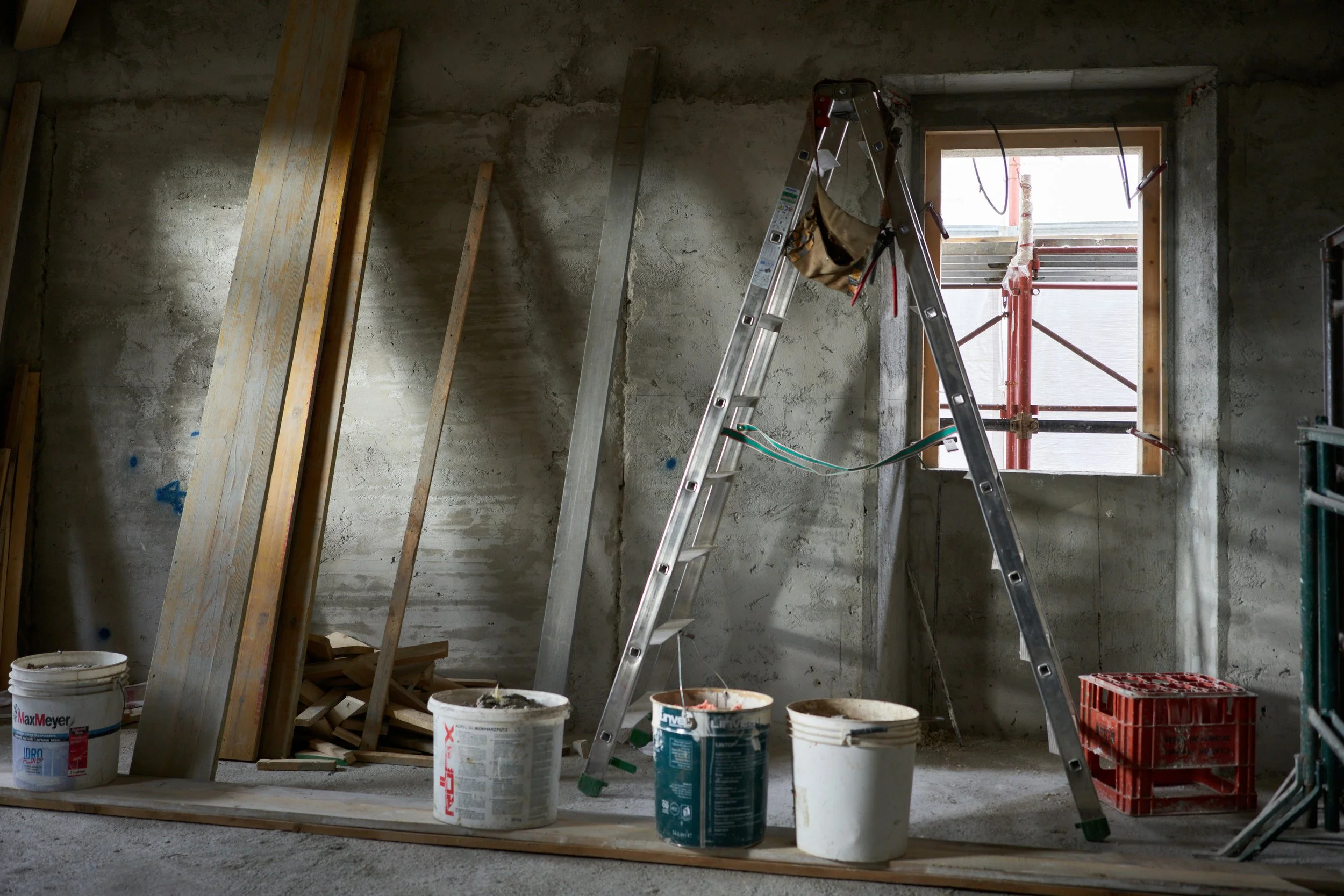
Photo by Steffen Lemmerzahl on Unsplash
The Mistakes We See Every Week
You don't want to learn these the expensive way. Here's what goes wrong on small-block projects in Melbourne, repeatedly:
1. Underestimating joinery lead times
Current lead time for quality custom joinery in Melbourne: Approx. 16-24 weeks from final drawings to installation (subject to availability). That means joinery needs to be designed and locked in before your builder starts framing. Most clients think joinery is a "finishes" decision. It's not. It's structural, electrical and plumbing planning. Miss this window, and you're either waiting 4 months with an unfinished kitchen, or you're buying flat-pack and compromising the entire design.
2. Choosing volume builders for small, complex sites
Volume builders are optimised for 300-500m² project homes on flat, accessible blocks. Small urban sites with tight access, heritage overlays, and custom design don't suit their systems. You'll get quoted low, then hit with variations. And their trades won't have experience with the spatial problem-solving that small blocks require. Better: Boutique builders or design-and-construct firms who specialise in renovations and tight sites. Yes, they cost 10-15% more upfront. They also finish on time and on budget.
3. Leaving interior design to the end "We'll build the shell, then figure out the interiors."
This costs 15-30% more than integrating interior design from the start. Why? Because you're retrofitting joinery into spaces that weren't planned for it, adding electrical after walls are closed, and solving storage problems with furniture instead of architecture. Interior design isn't styling. It's spatial planning. Engage early - ideally before or during concept design to avoid disappointment. The difference between a proactive design process and a reactive one is made very clear in the final design. It’s the difference between a quality build and a ‘patch job’.
4. Ignoring acoustic planning
Close neighbours + thin walls + hard finishes = noise problems. On small blocks, you're often building 3-4m from the neighbour's living room. Standard brick veneer construction (single brick + cavity + timber frame) has an STC rating around 45-50. You want 55-60 for genuine acoustic comfort.
Solutions that work:
Double-stud walls with staggered framing (no direct sound path)
Acoustic insulation (not just thermal batts)
Resilient channels for ceilings
Solid core doors instead of hollow core
Cost: Adds $8,000-18,000 to a 180m² build. Worth every dollar.
Don't learn this at 11pm when you can hear your neighbour's TV clearly.
5. Overbuilding for resale instead of liveability "We need three bedrooms for resale."
If you're planning to live here for 10+ years, build for how you'll actually use the space. The market for well-designed two-bedroom homes in inner Melbourne is strong - often stronger than mediocre three-bedroom homes with compromised living spaces.
A generous 2-bed + study + great kitchen will outperform a cramped 3-bed with poor storage every time.
6. Skipping the pre-purchase building inspection on the site next door If you're buying a small block, get a building inspection on your own block (obvious) and a planning review of the sites immediately adjacent (not obvious, but critical).
Why? Because if your neighbour has approved plans to build a two-storey extension, your solar access and privacy are about to change. This affects your design options, and you need to know before you buy.
Your Design Timeline: When Decisions Lock In
The biggest frustration we see? Clients who don't realise when decisions become irreversible.
Here's the actual sequence for a small-block renovation or new build in Melbourne:
Months 1-2: Concept design
Engage architect or designer
Establish brief, budget, priorities
When to engage interior designer: Now. Not later. Spatial planning, joinery design, and material selections need to be integrated into architectural drawings.
First-pass floor plans and elevations
Months 2-4: Developed design
Refine layouts
Structural engineering input (if required)
Detailed joinery design
Decision lock-in: Room sizes, door/window locations, structural approach
Budget check: If you're more than 10% over budget now, redesign. Don't assume you'll "value engineer" later.
Months 4-6: Planning permit application
Working drawings for council
Energy rating, stormwater plans, waste management
Submit to council
Timeline: 6-10 months for approval in inner Melbourne (faster in outer suburbs)
During planning review: Pre-construction planning
Get 2-3 builder quotes (don't wait for permit approval - good builders are booked 3-6 months ahead)
Lock in joinery fabricator (current lead times: 16-20 weeks)
Order long-lead items (windows, external doors, specialty tiles)
Decision lock-in: Materials, finishes, fixtures, appliances
Month 12-14: Planning permit approved
Finalise builder contract
Submit building permit
Building permit typically takes 4-8 weeks
Month 14-15: Construction start
Site establishment
Point of no return: Changes from here cost 2-5x more than changes during design phase
Months 15-24: Construction
Small renovation: 6-9 months
New build on small block: 9-14 months
Add 2-4 weeks for unexpected delays (weather, supply chain, site discoveries)
Total timeline: 24-30 months from engagement to moving in.
If you're planning to renovate "in the next two years," you're starting now.
Questions to ask potential designers/architects:
How many small-block projects have you completed in Melbourne? (Look for 5+ recent projects)
What councils do you work with regularly? (Council-specific experience matters)
Do you integrate interior design or is that separate? (Separate = coordination problems)
What's your approach to budget management? (If they don't talk numbers early, run)
Can I speak to two recent clients with similar-sized projects? (If no, why not?)
Red flags:
"We'll figure out the budget later" (you'll be over budget)
"Council will approve anything if you push hard enough" (no, they won't)
Designers who don't visit the site before quoting (context is everything)
"Small blocks are easy, we can knock this out quickly" (they're not, and you can't)
Useful resources:
Why Small-Site Design Requires Specific Experience
Small homes aren't easier to design. They're harder.
Every decision carries more weight. Every misstep is more visible. There's far less room to fix problems later - both literally (no space to add a wall later) and financially (changes during construction cost 3-5x more than changes during design).
This is why compact urban projects benefit most from professional design input early in the process. Not at the end when you're selecting paint colours, but at the beginning when spatial planning can still be optimised.
What to look for in a designer or architect for small blocks:
Site-specific literacy They should understand Melbourne's planning overlays, ResCode requirements and council-specific quirks. If they need to Google "what's a Design and Development Overlay," they're not experienced enough for your project.
Material realism Small spaces need materials that work hard: durable, cleanable, age well, don't show every fingerprint. Designers who specify white stone benches in family kitchens or pale grout in bathrooms haven't lived with their decisions.
Budget transparency Good designers talk about cost per square metre, lead times, and where budget should concentrate. If they're precious about discussing money, you'll be over budget by month three.
Portfolio evidence Ask to see 3-5 completed small-block projects with floor plans, photos and client outcomes. If they only show you renderings or styled shots without context, they're selling aesthetics, not problem-solving.
For homeowners planning to live in the home long-term, thoughtful design is the difference between a house that works for 2 years and one that works for 20. For property investors developing townhouses or duplexes on subdivided blocks, design quality is a value multiplier. Well-designed compact homes command 8-15% higher sale prices and rent 12-20% faster than poorly planned equivalents. The return on design investment in small-block projects is measurable.
Big Ambition, Delivered with Precision
Melbourne's urban fabric is evolving. Blocks are smaller, expectations are higher, and the gap between good design and poor design is widening. The homes that succeed on compact sites aren't the ones that apologise for their size. They're the ones that use constraint as clarity. When you have less space, you're forced to make intentional decisions. What matters? What doesn't? How do you actually live? These aren't compromises. They're edits. And editing - done well - creates homes that feel more considered, more personal, and more liveable than their larger, less thoughtful counterparts.
At Storey & Stone, we specialise in small homes with ambitious briefs. Projects where spatial intelligence, material quality, and construction reality need to align from day one. If you're planning a renovation or new build on a compact Melbourne site and want to talk through feasibility, budget and what's actually achievable, we'd welcome that conversation.
Next steps:
Review your site's planning overlays on Your Development
Download our Small Block Budget Calculator and Timeline Checklist
Book a Small Block Design Feasibility Review (initial consultation to assess your site's potential)
Because good design isn't about size. It's about precision.
Resources Referenced in This Article: